

Bernadette_Abraham
-

Hi @R-S – how wonderful it is to hear that you’re finally progressing and in a much better place. It really warms my heart and I’m so happy for you!
I’m also glad to hear that your appetite is returning – this is the power of working on the nervous system! Just keep in mind that it remains your biggest priority as you begin to move “South”. 🙂
In terms of next step, the priority should be to support stomach acid, bile flow and enzymes (in that order) – the 3 main digestive players. Since you cannot do betaine HCL yet given the mild gastritis, the next options are digestive bitters which stimulate all three.
From the list you shared, I can see 3 different options for bitters:
-Iberogast, Digestive Bitters (Dr. Mercola) and Ginger Root Tincture. Given your sensitivities, beginning with single-ingredients makes more sense instead of multi-herb formulas to help isolate what’s bothering you if it doesn’t suit you.
Remember to only introduce 1 new supplement/food at a time, and give your body at least 3 days to adjust and notice any symptoms.
If all goes well with the ginger root tincture, you can decide if layering in additional enzymes is warranted to help break down food better. If it’s working, you’ll notice less fullness after meals, less bloating, gas, etc. If you’re taking too much, you’ll get loose stools. Keep these tips in mind. Taking enzymes mid-meal or 3/4 way through your meal can ensure that your body still produces it’s own enzymes.
Once that’s on board and you’re doing well, you can choose to bring on board more gut healing support (DGL / zinc carnosine) or selenium to support T4 to T3 conversion. It all depends on how you’re feeling. If your gut is still doing well, then start with selenium as that’s part of the “root cause” for lower stomach acid production given suboptimal thyroid function. If your gut feels like it needs some TLC, then you can go back to marshmallow root if that suited you better. You don’t need to do all of the gut healing therapies – these are all options. Stick to what feels best for you.
Once selenium has been brought in successfully for at least 2 weeks and you’re symptom-free, kelp can be added in by sprinkling it over food as you would salt. A little goes a long way.
As for aloe, you literally scoop out the gel and add it to a smoothie. It’s not as convenient as other therapies, so you can leave this one out if others are working.
Let me know if you have any other questions. You’re doing a great job!
-
@healthyliving99 I really appreciate how thoroughly you’ve researched this. You’re absolutely right that colloidal silver is a controversial topic, and your question is warranted.
Just to clarify… the Silver Hydrosol (such as Sovereign Silver or Argentyn 23) in the sore throat relief protocol is meant as one option for short-term, localized use as a topical throat spray or gargle, not as a daily oral supplement.
Silver has long been recognized for its antimicrobial properties, especially against bacteria and viruses, which is why it’s used in medical wound dressings, nasal sprays, and throat preparations. The goal here is simply to reduce the local microbial load and soothe throat tissues, not to deliver silver systemically or use it as an “essential mineral.”
Regarding Health Canada’s statement… the link you shared refers to an unauthorized, high-concentration colloidal silver product (20 ppm) that was being marketed with unapproved claims. Their advisory targeted that specific brand and warned that such products can cause harm, especially if used long term or at high doses.
That advisory doesn’t mean all silver products are approved or that any are recognized as essential minerals. In fact, Health Canada does not classify silver as an essential nutrient. The official position is that silver has no known nutritional role and should not be taken daily or used systemically.
With that said, more reputable pharmaceutical-grade hydrosols such as Argentyn 23 or Sovereign Silver differ from generic “colloidal silver” products in a few key ways:
-
Purity: 99.999% pure silver suspended in pharmaceutical-grade water
-
Low concentration: Typically 10 ppm, well below the levels linked to argyria (skin discoloration)
-
Particle size: Extremely small particles (around 0.8 nm) that disperse easily and are less likely to accumulate
-
Good Manufacturing Practices : GMP-certified and tested for contaminants and consistency
However, these safety claims are being made by the manufacturers themselves and are not independently verified by Health Canada, so they still require caution and moderation.
That’s why in the Sore Throat Relief Protocol, silver is:
-
Used locally and short-term (3–5 days) as a spray or gargle, similar to an antiseptic mouthwash
-
Suggested only for individuals who can’t tolerate stronger herbal antimicrobials like oregano or Biocidin
-
Never intended for daily or long-term ingestion
This limited topical use aligns with silver’s recognized antimicrobial benefits and avoids the systemic risks Health Canada warns against.
Hope that makes sense.
-
-
@naslam1603 – yes, you’re right – that’s more than just Lyme alone. The Borrelia Elispot is the actual test for Lyme disease.
The others are other co-infections that can either coexist with Lyme or trigger similar immune responses which is why it’s a good idea to test them together.
-
Hi @naslam1603 – it would help to know why you are taking it.
But in general, it can be taken with or without food, and again timing depends on the situation.
-For general gut support, take it with meals since it minimizes digestive discomfort
-If taking it during a course of antibiotics, space it out 1-2 hours apart (a small snack is fine)
-If it’s for active issues like diarrhea or Candida overgrowth, it’s best on an empty stomach for quicker action, but if it feels too harsh, then taking it with food works too.
The time of day is less important unless it’s with antibiotics – that needs to be 1-2 hours after antibiotics. But morning or night works too for general use. I generally recommend that my clients take them in the evenings to minimize any digestive discomfort they may experience. But that’s my personal preference. Some prefer taking them in the mornings for consistency and to not forget. It’s up to the individual and what works best.
Hope that helps.
-
Bernadette_Abraham
October 2, 2025 at 2:43 pm in reply to: Electric toothbrush and EMF / air quality Meter@Yasmine – Nick Pineault (also known as The EMF Guy) who was also our guest in B Better has actually spoken about this in the past and points out that while electric toothbrushes do emit EMFs, the exposure is so short (just a couple of minutes a day), that it’s really insignificant compared to the hours we spend on Wi-Fi, phones, or Bluetooth devices.
For children especially, the bigger concern is long-duration exposure. A toothbrush simply doesn’t compare to the constant wireless radiation from devices pressed against their heads or bodies for hours. The real wins come from reducing those high-load exposures like turning Wi-Fi off at night, not carrying phones on the body all day, and limiting wireless headphones.
There aren’t really any true “low-EMF” electric toothbrushes out there, and honestly, you don’t need one. The only thing I’d avoid are the “smart” versions that connect with Bluetooth or apps. Those just add an unnecessary layer of radiation. A simple battery-operated toothbrush is more than fine, and if you ever want zero EMF, a good old fashion manual brush still does the job.
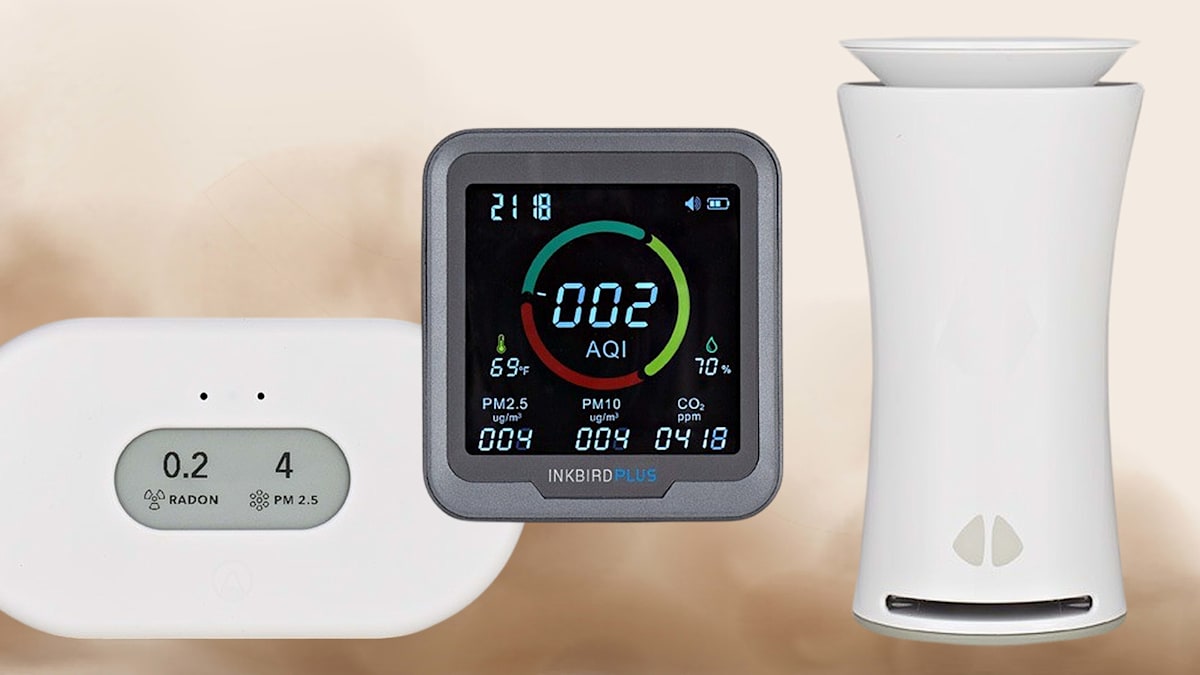
As for indoor air quality meters, Consumer Reports has a really helpful guide that compares the top options and breaks down the pros and cons. You can check it out here.
And regarding the AC filter/duct cleaning schedule, this is what I recommend in Dubai (given our heat, dust, and humidity):
–Change main AC system filters every 3 to 4 months, and do a full duct + system cleaning annually.
–For split / in-room AC units, clean their filters every week, and get a professional mold / unit deep-clean every 3 to 4 months.
Hope that helps.
consumerreports.org
Best Indoor Air Quality Monitors of 2025 - Consumer Reports
The best indoor air quality monitors detect VOCs, particulate matter from wildfires, and other pollutants. Some even give air quality index (AQI) info.
-
@Raahema – I’m replying here in response to your last 2 replies.
I searched to see if I can help you locate mold inspectors/remediators in your location. Here is a list you can contact to confirm:
-Z Proof Tech: https://www.facebook.com/zprooftech/
-Smart Fixers: https://smartfixers.pk/services/waterproofing/
-Kaufmann Enterprises: https://kaufmann.com.pk/cities/islamabad/waterproofing-in-islamabad/
-Hafiz Pest Control: https://hafizpestcontrol.com/disinfection-sanitization-services/ (the do mention mold as part of their sanitization services, but not sure if they’re specialized in mold remediation)
When you call, you can ask them if they have any international mold inspection or remediation qualifications as an additional layer of confidence in their knowledge about mold.
As for the OAT and MycoTox test, I also confirmed with Nordic Labs that they do ship to Islamabad, Pakistan if that is something you’d like to pursue. As a B Better member, we give our members access to self-order functional tests. For reference, the OAT test costs $349 USD and the MycoTox costs $465 USD. There’s a combo package including both for $699 USD. This is paid directly to the lab. If you’re interested, simply contact support@bbettermembership.com and they’ll help give you access.
I also want to commend you on trying to understand your labs. We do have a course called Interpreting Basic Blood Chemistry to help our members better understand basic blood markers and what the highs/lows can mean. I believe that might interest you.
I took a look at the labs you shared. Unfortunately, none of those will be able to tell us if there’s mycotoxins in the body.
Your CBC does point to “macrocytosis” where your red blood cells are larger than normal, and that usually comes from either an iron deficiency and/or a need for B12/folate. You can learn more about RBC markers here and how to interpret red blood cell markers here. Ferritin, our iron storage, below 50 can indicate a need for more iron.
In functional medicine, optimal vitamin D is roughly between 50-70 ng/mL. You can read this handout to better understand your level and what to do to get it to more optimal levels.
CRP below 1 is ideal, however as you mentioned ESR, another non-specific marker of inflammation is high. It could be lab error, but if you re-test and it remains high, then that does indicate some inflammation in the body. This very well could be due to iron deficiency anemia as well. I do want to point out however that your lymphocytes have been consistently clinically elevated since 2021. This often points to an acute viral infection, and this can affect TG antibodies.
Has a viral panel ever been done? Such as CMV and EBV? It might be worth exploring with your doctor. In the meantime, please read this Virus/Flu protocol for “long term viral support & prevention” tips.
The goal should be to improve overall immunity. Vitamin D as discussed above can be optimized. If you haven’t yet tested RBC zinc, RBC copper and vitamin A. This is warranted. If they are low, it’s a good idea to optimize these as well to support immunity.
How is your stress level? This impacts immunity. How is your sleep? This also impacts immunity. How are your bowel movements? Do you pass stool (Type 3-4 on the Bristol stool chart) at least once per day? Ideally 2-3 times? Being able to clear toxins is a foundational priority.
Given the macrocytic anemia, testing RBC B12 and RBC folate as well could be helpful to know if supplementation is required to help optimize these levels since they also help with RBC and WBC production. Ensure no supplementation with B vitamins at least 3 days before testing to get a true baseline level.
Please let us know when you get your H Pylori test results back.
And yes, mineral deficiencies such as zinc can contribute to low stomach acid as well. That’s another reason to test RBC zinc. If you haven’t yet watched it, please review this lesson for contributing factors of low stomach acid.
Ok to summarize and next steps for you to consider:
1. Contact the companies I shared to assess and remediate your bathroom and any other affected rooms
2. Reach out to support if you’d like to pursue functional testing
3. Please watch all the lessons I’ve shared for a better understanding of your results
4. Explore viral panel testing
5. Consider additional tests: RBC zinc, RBC copper, vitamin A, RBC B12, RBC folate (RBC will tell us what’s in the cells, versus serum – what’s in the blood which is highly affected by what you ate the day before)
6. Given the higher lymphocytes, persistent TG antibodies and lower WBC, consider long term viral support/preventative measures as rapid relief until the immune system can tackle the issue
7. Please let us know about your stress, sleep and bowel movements.
-
@DXB – I’m really sorry to hear about your uncle’s diagnosis and everything he’s going through right now. I can feel the heaviness you’re all experiencing and empathize with the strong desire to ease a loved one’s suffering.
Here’s my take on your questions:
1. Yes, I would absolutely bring a hematologist on board even though multiple myeloma wasn’t diagnosed. A hematologist can help rule out other plasma-related causes or track any secondary developments. If traveling isn’t possible, many major hospitals now offer virtual consultations or case reviews so that might be a great option given his condition.
2. Right now, given the array of symptoms he’s experiencing, the goal should be to help ease his discomforts and promote strength and recovery:
-Given his fluid loss, replenishing electrolytes is a priority. Consider potassium- and magnesium-rich broths, or clean medical-grade electrolyte powders without added sugar.
-For nausea/digestive support, consider small sips of strongly brewed ginger tea or ginger/B6 supplements, if cleared by the doctor. I share more options in this protocol here.
-Given the stress of the medications on his liver, consider liposomal glutathione or NAC (only under medical supervision) for liver and antioxidant support.
-If he’s losing weight and not eating much, consider liquid meal replacement such as “Liquid Hope” to provide liquid calories. Kidney-friendly protein sources like hydrolyzed collagen or pea protein can also be an option to preserve muscle mass – but always run these by his doctors first, especially given his kidney issues.
-If he’s having lots of fluid retention, ask if he’s allowed to get a lymphatic massage or even elevating his legs.
-Finally, mindset is super critical in these situations. Being in and out of hospitals can really take a toll on one’s spirit. My best suggestion is to try and fill his days with things that bring him lots of joy and laughter. Does he have a favorite comedian or funny sitcom he can watch while he’s at the hospital? Downloading meditation apps and deep breathing apps if he’s open to them can also help bring peace and tranquility in times of stress and uncertainty, but also improve oxygen flow naturally.
I know this must be so hard for everyone, but you’re doing exactly the right thing by exploring every angle and keeping him as supported as possible. He’s lucky to have your support.
Do keep us posted, and we’re here for you too!
-
Hi @Raahema – this is one of the main reasons why mold illness often goes undetected for a long time. Symptoms vary from person to person, and due to genetic factors, mold can affect some family members more than others (we like to call them the “mold canaries” that sound the alarm bell for the rest of us), while others take much longer to start feeling its effects, if at all.
A wet/damp wall with bubbling is often a sign that mold is brewing so it’s probably best that you bring in a mold inspector to check. It could be affecting nearby rooms as well. Where do you live? Did you watch this video to help you find a mold inspector in your area?
That would be a wise next step given what you’re describing.
-
Hi @Raahema – I just replied to your other thread about mold & mycotoxin illness symptoms and questionnaires to fill out. You can find that thread here and I’ll share them again below.
Can you share more as to why you suspect that mold might be at play? It’s definitely very common but often overlooked and brushed off as an “aesthetic” issue. Have you ever had water intrusion or water damage in the house before? Is humidity high (above 50%)? Do you visibly see it or smell it (although many don’t have smell)?
In the Mold & Mycotoxin Illness course, I shared testing options from the least to most costly to help a person start investigating before paying for more expensive mycotoxin tests.
For starters, it’s definitely worth filling in the mold symptom questionnaires for a subjective assessment. The next step could be to hire a mold inspector to assess the home environment (or wherever mold is suspected). This lesson also shares what to look for when testing the home environment and some self-assessment tools.
If finances allow, there are a number of different tests that one can do to assess if there is a body burden of mold. The most straightforward test is a Mycotoxin test to see if the body is excreting mycotoxins in urine. There are however, limitations to this test especially if someone’s detox pathways are blocked.
If you have the time to watch the other tests, I would highly recommend you watch them to know which test might be the most appropriate one for you at this stage. They start here with the VCS test.
And regarding H Pylori testing, I think that’s a great idea given your symptoms of possibly insufficient or low stomach acid. Breath test is considered the gold standard testing option, and can be done through insurance with a doctor. However, I have found it to give false negatives. Instead, my preference is the PCR stool test by Diagnostic Solutions which costs ~$175 USD I believe. This provides a quantitative value (an actual number) and not just a positive or negative result, which is helpful to track progress as well. If finances are tight, definitely go with the breath test but if the result comes back negative, consider re-testing with a PCR stool test. If you need support in accessing that test, please contact support@bbettermembership.com and they’ll assist you.
-
@Raahema since mold and specifically mycotoxins are small enough to pass through the smallest alveoli in the lungs, they can make their way to every organ/system in the body. This is why standardizing a common list of symptoms is challenging.
However, there are definitely tell-tale signs of mycotoxin illness such as feeling better when you leave the environment, and symptoms returning once back. Brain fog, memory loss, frequent urination at night, weakened immunity, body aches/pains, etc.
You can learn more about the symptoms here in our Mold & Mycotoxin Illness course.
I’d also encourage you to fill out the symptom questionnaires which can provide some better insights into the possibility of mold & mycotoxin illness.
-
@naslam1603 No issues with opening up a capsule and sprinkling a little in water or food.
Really getting in tune with your own body’s signals is ultimately the best test and measure of what’s right for you.
-
Hi @naslam1603 – yes, it’s Armin Labs that will be testing for Lyme and co-infections specifically. I saw the lab listed on the website you shared.
-
@naslam1603 I know that you’re exposed to mold so just be cautious about introducing S Boulardii. Take note of how it makes you feel.
There are two schools of thought about S Boulardii to fight Candida overgrowth which is 1) Dr Klinghardt: it helps fight it and 2) Dr Jill Crista: it competes with it so the “threat” can release mycotoxins and create symptoms. And of course, if there’s a sensitivity to yeast, then it’s also to be avoided.
I have witnessed Dr Jill’s theory with a client, so I now wait to introduce S Boulardii with very sensitive clients until we’ve strengthened the foundations and they are out of mold.
On the other hand, I have also witnessed benefits with S Boulardii in mold exposed clients, so now I give a word of caution to go “low and slow” for those who want to take it, and to take note of any physical symptoms that may suddenly appear.
Hope that gives you some additional context and nuances to consider.
-
Hi @R-S – we like to see minerals such as selenium in the upper half or upper 2/3rds of the reference range, so it is suboptimal. To calculate that, you add the lower and upper reference range numbers and divide it by 2 to get the half (50+120 = 170 divided by 2). Ideally should be higher than 85. Yours is 79.
-
Hello @Raahema – yes exactly. What you are currently experiencing now is how it works in B Better, except you’ll have full access to our full library of resources to enable you to get the answers you need. We guide, educate, empower and support. We don’t prescribe. Meaning, we can’t tell you exactly what supplement or dosage to be taking, but we can offer specific guidelines and supplement options to help you confidently make that choice yourself. That’s the main difference since we are not working together 1-1.
We have educational courses built out into short lessons for quick answers. We have step-by-step protocols that help offer quick symptom relief. We have programs that help guide our members towards resolving specific symptoms (both in terms of rapid relief and root cause resolution). Hundreds of handouts, checklists, guidelines, etc. And so much more. Some members love to sit and learn on their own, while others prefer to ask questions directly in the forum and be guided to the answers. And some use the forum to upload pictures of practical daily life such as ingredient labels and brand recommendations.
We’re here to help however and whenever you need it.
My Profile
Bernadette_Abraham
Hello everyone! I'm here to help support your health journey any way I can.
My Location & Socials
United Arab Emirates
(UTC+04:00) Abu Dhabi, Muscat
Upcoming Events
-
25 FebThe Myths & Truths about Hydrogen Water with Dr Tyler LeBaron8:00 pm - 9:00 pm
-
12 MarLive Q&A Call5:00 pm - 6:00 pm
-
11 AprLive Q&A Call5:00 pm - 6:00 pm